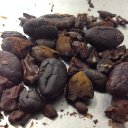
Rusty looking cacao: is that a defect?
Posted in: Tech Help, Tips, Tricks, Techniques
Daniel -
Did you buy them roasted or did you roast them yourself. If you roasted them yourself, did they look this way before you roasted them?

Daniel -
Did you buy them roasted or did you roast them yourself. If you roasted them yourself, did they look this way before you roasted them?
Shelling a few roasted cocoa beans from a new origin and I'm finding a lot of what looks like rust.
The beans don't taste bad and I'm having trouble describing the taste. It's pretty muted, the texture might be a bit chalky.
Does anyone know what this is?
David;
I'm right in the process of building a new lab and factory. As someone who has over the past 10 years made and sold several million dollars worth of chocolate, I can answer ALL of your questions.
Brad@Choklat.com or 403-472-8701
I guarantee that your savings will be in the 10's of thousands of dollars.
Cheers
Brad
I know several makers who have Cacao Cucina equipment. It's value is that it is NSF certified and made with UL listed parts and adhere to all sorts of safety regulations. Therefore, they tend to be expensive for what they offer. People like the cracker/winnowers, even though they are expensive. The one piece of equipment I've seen in use that I just cannot recommend at all is the liquor grinder.
Caotech and Buhler are both highly-respected companies so I would have no problems recommending equipment from either of them. It's a matter of capacity and pricing.
By lab conche, you refer to a "universal?"
Thanks Clay, i was writing in Word and then pasting it here. That was causing the error.
I found a "small" laboratory ball mill from Cacao cucina. I don´t know how much it cost yet, but I have a bad impression from Cacao Cucina from some forums and opinions.
Does anyone have any experience with them?
On the other hand, Caotech offers me 5kg laboratory conche and ball mill for about 12.000 euros each and i think they look great.
Any comments on Caotech? Caotech Vs Bühler ?
Chocolate World Mold CW1453
15 gram cavity
3x8 total 24 cavities
have 6 molds available
$12 each plus shipping
Used Walnut Molds
by Chocolate World CW1015
I have 10 toal. Willing to sell individually.
13 gram cavitiies
3 x 8 - 24 total cavities
$12 each plus shipping.
David:
With regard to the error, you are trying to enter some HTML directly into your post that is not allowed - or something the software thinks is HTML. One reason is to keep people from posting arbitrary Javascript. Were you using any pointy brackets "<" or ">"?
To the best of my knowledge there are no ball mills at the price point you mention, lab or otherwise — even very small ones.
I know of a source for a two-roll refiner (granite or steel, 300mm wide, low-speed) for under €10,000. Three-roll refiners (granite or steel, 400mm wide) are €12,000 or so. Both are plus shipping.
Hi everyone i could really use some help with some work stuff. i am recently working with some colombian institution and they want to set a state of the art cocoa and chocolate lab, wich i think it is great.
The problem is that someone who does not have a clue about that, already had some budget assigned to each equipment. My job is to find the specific piece of equipment and supplier that fits the name and price already assigned, and of course it is a huge pain ....
So, i would really appreciate if someone could help me with some specifics
Laboratory ball mill around 1 k
laboratory or commercial roll refiner mill around 10k
someone knows if there is a specific equipment and use for cocoa and chocolate for a potentiometer ? no more info
i know i am taking a long shot. i am aware that laboratory equipment is more expensive that commercial, but i am running out of places to look and ask about this.
i will take any suggestions and comments
PD. i know the spelling is not right, but i am having some error trying to post.
You have entered an invalid value for "text" - value must be printable characters with the following allowed HTML tags: span,strong,em,a,b,u,i,p,div,br,img,h1,h2,h3,h4,pre,hr,ul,ol,li
i do not know exactly wich caracter is invalid in my text
I am also interested in price, photos, and location. My email is Sarah@chocolita.com
Hi, I'm looking for a case or two so could you email me photos pricing and your location. cherri@cherrischocolart.com
Hi Mary Lou,
I saw your ad for the Hilliard. It is just the tempering machine, does not include the pump/conveyor? If that is correct, serious offer of $4,000.00 plus shipping.
Well maintained. Gently used. Alternative Air/ColdCore Model AACCA-60R Dimensions: 5 ft length x 24 inch depth X 48 inches height humidity/temperature controlled; brass; curved. 4 shelving displays (3 glass, lower level, metal) and lower storage compartment. 2 glass doors open in back.
Please email for photo, pricing or more information.
julie@sibusura.com
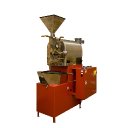
Excellent condition. Custom-built. Gently used. Roast cacao beans and/or coffee beans. Was used for cacao beans. 3 KiLO per batch capacity. Electric. Beautiful piece. We were very happy with this gem. Photo attached. Email for pricing, specs, and/or additional information. Manual notebook and training CD included. On-site training for extra cost available. Serious inquiries only.
Reduced Price $6800, regular asking price $7500 (AND includes $700 shipping crate). Shipping costs is buyer's responsibility. Original cost with parts approximately 13k.
Wire payment only accepted.
Roasting machine already in custom-built crate...included in price
julie@sibusura.com
Quantity 16 Molds, asking $15 each or $200 for all of them -
All in great shape.
Greg -
You should try to replace the strings with ones of the same diameter. If you are uncertain what that is, contact the manufacturer or a reseller here in the US, who would also have the tools.
Some people I know put their guitars on a half-size (short) bun rack (speed-rack). They can found for $60-$120 through online stores. They can also cost $300+ but a search should reveal a good price.
You can try a silicone mat to see if you like it. Most people I know use acetate as you'll get a smoother surface.
TheChocolateLife is what you make of it.
It's a fabulous repository of information and discussion going back over eight years now.
Posting into one of the main forum areas almost always gets responses - and often many of them; not many people say hello
Great to meet you. It's fairly quiet here, isn't it?
Hola Dan,
I am a chocolate maker in Costa Rica and have beans I could sell to you. Where are you located? We should talk if you are interested in 100k or more.
Hi Elizabeth,
Interested in the melter. Could you contact me when you get a chance. 541-556-4141
Thanks,
Van
Attached are more pictures.
Is this still available? If so, please email me at bmarcoe@marcoecandy.com
Hi Matt,
You are correct, that's no tempering machine, just a melter and you have to temper the chocolate manually.
Recently I had to purchase a chocolate melter and I was advised to buy this one https://www.kreaswiss.com/chocolate-melter-20kg from kreaswiss. So far I had no problems.
Best of luck to find the right tool for you!
Grant -
I've known Nino for many years as a ChocolateLife member and FBM customer. I had the opportunity to meet him for the first time at the Salon du Chocolat in Paris last October.
Glad the two of you can connect!
Small world Grant!
i will contact you directly via email, so we can catch up!
Oh and one thing I forgot to add is I am from South Africa. I actually have "Discover Chocolate" next time me and have dealt with Nino above in RSA.
Hello, I'm interested in this grinder. We're located in San Diego, CA. Please respond to moore.deanna@gmail.com. Thanks!
There is a huge amount of science on these topics that inform the engineering of tempering machines, especially "continuous" machines.
The basic idea is to:
In a screw-type continuous tempering machine (for example) any crystals in the chocolate is are melted out by the time the chocolate reaches the bottom of the bowl. The chocolate is then pumped through a cooled pipe. The crystals are formed on the inner surface of the pipe and scraped off and mixed by the auger/screw. By the time the chocolate exits the top of the pipe it's in temper. Any chocolate that is not used goes back into the bowl where the crystals get melted out. It is necessary to match the length and temperature of the pipe with the flow of the chocolate to make sure that enough of the right crystals are formed and mixed properly. I know that on some FBM machines there is a "hard" and a "soft" temper setting that can be selected based on the type of chocolate. Some chocolates can be cooled faster than others (it depends on rheology/fat content). With those chocolates the "hard" temper setting is chosen and this runs the cooling system more aggressively.
With many batch tempering systems seed chocolate that is already properly tempered is required to force the proper crystal structure as the chocolate cools down. In these systems you can run them as hard as you like, but you need to pay close attention to make sure you're not over-crystallizing. Semi-automatic machines (such as Chocovision) have sensors and microprocessors that have time/temp curves built in. Manual systems (e.g., JKV, Hilliard) require that you control the temperatures manually, so you have to know how to temper to use them effectively.
Manual tempering (e.g., using a melter) or assisted-manual tempering (Chocolate Wave) require that you know how to temper and what temper looks like. The process is to create seed chocolate and add it to melted chocolate and then find an equilibrium temperature where crystals are not melted out or do not form too quickly. How long the process takes is up to the skill of the person doing the tempering.
Ideally, what you're looking to do is get into temper as quickly as possible and spend as little time as possible to maintain temper. You can't apply so much heat that you scorch the chocolate (or cause it to separate) and you don't want to cool it so quickly that you can't control the speed of crystallization and the chocolate over-crystallizes.
No matter what the approach, from my experience it is having precise control over temperature that is important, followed by reaction time. For example, if you're using a system that requires cold water for cooling you need to make sure that the temperature of the water is consistent. If you need more cooling, it might be hard to lower the water temperature quickly - or warm it back up. If you are recirculating refrigerant gas, the reaction time is much faster, and you can use resistance wiring to warm things up quickly.
If you're working by hand, controlling the envionmental ambient temperature and humidity are one key to consistent tempering. You also want warming vessels that are preceisely calibrated and can maintain a consistent temperature. With manual (or assisted-manual) tempering it's also about tempering the right amount of chocolate for your production needs.
Marc:
Welcome to TheChocolateLife!
Update... many years later!
We have found a way to build our own cocoa butter press to make about 10kg/h. We are looking into building the machine although is not cheap... it costs about $20K... but we could process about 70kg cocoa butter per day....
Will keep posted
Since your willing to spend, 20K, did you check the price of the 200 T (5KG per batch) Cacao Cucina (It is around 25K but I am not 100% sure) and it should get to what you're looking for per day:
http://cacaocucina.com/cocoa-butter-press/
Update... many years later!
We have found a way to build our own cocoa butter press to make about 10kg/h. We are looking into building the machine although is not cheap... it costs about $20K... but we could process about 70kg cocoa butter per day....
Will keep posted
Hi Mark,
I built a vibrating table with a much smaller motor, a little too small, but my table is only for two molds. See here: Vibrating table . I purchased the motor as listed in your post and I just tried it out tonight. It was quite comical. Something like trying to play whack-a-mole except I was chasing the mold around my small table to fill it with chocolate. I fill my molds using a 2oz scoop with chocolate from a melter. I even had the speed on the new motor as low as I could go without it stopping. I'm going to adjust the blades in the motor to calm it down a little.
On a positive note, I don't think the chocolate that I just molded will have any air bubbles. 
-Thomas
Hi Thomas. I warned in my post it was a bit of a beast! Set the blades for 11% Fc and it should be good, you may have got away with using a MVE21 series motor and they are a little bit less expensive.... Still better too much shaking rather than not enough go! MJ
Hi Mark,
I built a vibrating table with a much smaller motor, a little too small, but my table is only for two molds. See here: https://www.thechocolatelife.com/thomas-snuggs/gallery/vibrating-table/all. I purchased the motor as listed in your post and I just tried it out tonight. It was quite comical. Something like trying to play whack-a-mole except I was chasing the mold around my small table to fill it with chocolate. I fill my molds using a 2oz scoop with chocolate from a melter. I even had the speed on the new motor as low as I could go without it stopping. I'm going to adjust the blades in the motor to calm it down a little.
On a positive note, I don't think the chocolate that I just molded will have any air bubbles.
-Thomas
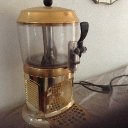
Curious abou the drinking chocolate machine and the RoboCoupe. Can you send me more pics and details of those two?
From what I have experienced, yes the table top method works better than using a bowl, for me. It gets spread out flat on a marble slab or
stainless steal table and then moved around till it goes down in temp to 27 - 29 etc. working quickly and constant stirring - even temper is key as well. here is the video that helped me the most so far:
Welcome to the club Marc!
Completely new to the field, so just wondering if there is any science in the actual speed of cooling the chocolate down and heating back to temper. I mean is there any advantages to certain processing speeds, cooling the melted chocolate faster, cooling it slower or whatever?
Cheers
Hi all, I'm Marc, nice to be on board. Just getting into the chocolate making side myself, but a passionate cook in more general terms. Looked at a few forums before joining, but I have to say that I'm a very common sense kind of guy and I found a lot of common sense advice handed out here from experienced hands, so decided to make this home 
Hi, Sabrina. I am happy to help. Please send me an email with all of your contact info and I'll send off a quote for some machinery thanks.
Jim
Hi Jim,
I deffinetely need advice on the proper start up equipment for my chocolate business. In the moment I have 2 working stone grinders from premier tilt and the rest i do by hand. I melt down the chocolate in the dehydrator when I'm ready to work with it. This takes around 5 hours. Then I temper on the stainless steel table, and poor to bar molds, with some reheating in between as the chocolate cools and becomes too thick to work with. I keep the bowl of chocolate on top of the dehydrator when not using it, to keep it warm.
I would like to be able to produce a few hundred bars a week by getting some eqipment, maybe a temperer and warming tank with precise temp control. A pourer and mold shaker would help as well. Would you be able to reccomend something to start out with?
Thanks for your time,
Sabrina swayder